 Portuguese
Day 02 April 2013 became the emblem of a celebrations agenda and of new actions proposed around the 50 years of the 40 hours of Angicos’s experience in Rio Grande do Norte (a Brazilian State) developed by Paulo Freire (1921-1997). The Ministry of Education and Culture of Brazil – MEC created “Paulo Freire – 50 years of Angicos” Commission, which counts with the participation of Francisco das Chagas Fernandes (coordinator); Betânia Leite Ramalho (state secretary of Education and Culture, of Rio Grande do Norte). Maria Eliete Santiago (UFPE – Universidade Federal de Pernambuco) José de Arimatea de Matos (rector at Universidade Federal Rural do Semi-Árido – UFERSA); José Eustáquio Romão (professor at Universidade Nove de Julho – Uninove); Mauro José da Silva (Diretoria de Políticas de Alfabetização e Educação de Jovens e Adultos – SECADI/MEC – in English, “Board of Directors of Literacy and Education Politics of Youth and Adults”); Moacir Gadotti (President of Honor of Instituto Paulo Freire Brazil) and Timothy Ireland (UFPB – Universidade Federal da Paraíba). Among the goals of the Commission, through this celebrations agenda, is to advance in literacy policies and actions, which must, however, transcend the character merely commemorative, gaining pedagogical contents to give continuity to freirean ethos in Brazilian education.
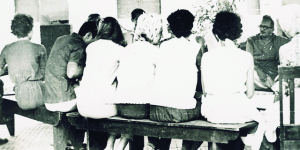
1964
The first and most expected contribution to the vivification of freirean thought is what is called of “redefinição da política nacional de Educação de Jovens e Adultos” (in English, “redefinition of the national politic of Education of Youth and Adults”). It is about a national effort for the universalization of literacy in Brazil. Some considerations on this policy already can be found in a technical note of SECADI, the one under the number 154, of 2012, comprising literacy “as a process which brings in its core the demand of continuity of studies through the offer of EJA (Education of Youth and Adults) by public education systems”.
The universalization of literacy is present as premise of this agenda since the beginning of the celebrations, which effectively occurred in September 2012, with the I Encontro de Educação de Jovens e Adultos e de Educação Popular (in English, First Meet of Youth and Adults Education and Popular Education) at the campus of the Universidade Federal Rural do Semi-Árido – UFERSA, in Angicos. In the event, were present many educators, students and researchers linked or influenced by Paulo Freire. The director of Institutional Development of “Instituto Paulo Freire”, Professor Paulo Roberto Padilha, opened the meeting, together with the rector of UFRSA, reinforcing the importance of the rescue of the history of Angicos and of the fiftieth’s celebrations of the biggest project in the struggle against illiteracy in Brazil. “This is a cause that remains and renews itself”, said Padilha, adding that “Angicos renews the future, relaunching the dream of many projects about Paulo Freire”. He also highlighted that “From this meeting others will come, until September 2013, month which we are going to celebrate Angicos 50 years, in a national pact for literacy”.
50 years of Angicos in Rio Grande do Norte Paulo Freire Commission
The government of Rio Grande do Norte state, in Brazil, through the State Secretariat of Education and Culture and along with the Regional Commission of the Angicos 50 years Project, was the mastermind and performer of a big event, linked to this international ephemeris, on 2 April mentioned in the beginning of this article, becoming the emblem of a big and complex calendar of events, publications and government acts, by bringing strong emotions to all attending the event to remember certain details of the revolutionary experience in Brazilian “sertão” (a dry land).
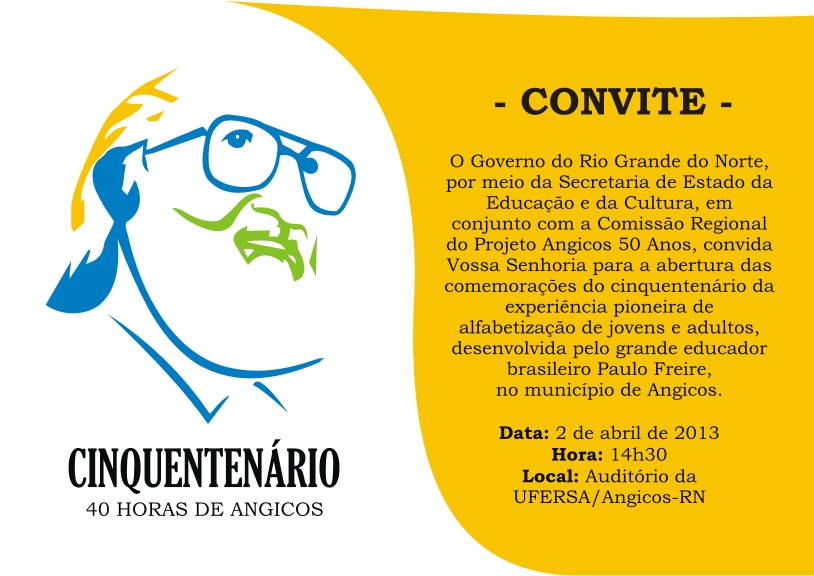
The day, by the way, is significantly very symbolic to the community and to freirean legacy because on 02 April, 1963, happened the fortieth hour (lesson), given by the president of the republic, João Goulart, with the presence of many governors from Northeast and representatives from “Aliança para o Progresso” (Alianza para el progreso was a program of economic development for Latin America headed by USA to save it from the communist dangers), which also spoke Aluísio Alves (governor at the time), Paulo Freire and the former ex-illiterate Antonio Ferreira. The oldest student, Maria Hermínia, delivered letters written by the participants of the course to the president. And thus, was formed the first class of Angicos. In this occasion, also was noticed the presence of General Humberto de Alencar Castelo Branco, wearing the Brazilian army’s uniform, commander of the Military Region in Recife, that, at the end of the class, would have said to Calazans Fernandes (National Secretary of Education): “Young man, you’re looking for trouble around here, in the Northeast” (Fernandes & Terra, 1994: 18).
The opening ceremony took place at 2:30pm, in the auditorium of UFERSA campus and at the José Rufino School, in the city of Angicos, and Instituto Paulo Freire, which was contributing to the organization of the meeting, participated in the opening round along with other institutions: MEC/RN (Ministry of Education and Culture), SEEC/RN (Secretariat of Education and Culture of Rio Grande do Norte State), UFERSA, UFRN, UFPE, UFPB, UERN, Municipal Secretariat of Education of Angicos, Potiguar Forum of EJA, UNDIME/RN (Union of Municipal Leaders of Education), SEEC/PB, UNESCO Chair of EJA and Paulo Freire Center – Studies and Research/PE.
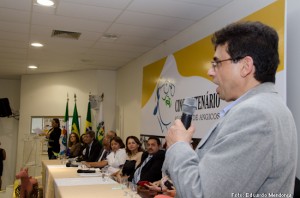
Lutgardes Freire and the opening of the event in 2013
Paulo Freire Pact
Also in the first day of the event, the governor of Rio Grande do Norte State, Rosalba Ciarlini signed the “Pacto Paulo Freire pela Educação de Jovens e Adultos” (in English, Paulo Freire Pact for the Youth and Adults Education), recognizing the importance of the educator and his studies for the State. The signature was held in front of the State School José Rufino (which was called “Grupo Escolar José Rufino” and one of its classrooms was the first space to host the experience of collective literacy of Freire) and does reference to the Decree published in the Official State Gazette on 28 March, which established 2013 as the “Year of Education of Rio Grande do Norte State”. On 03 April, also an administrative act was published, in the same Gazette, creating the Executive Committee that will be responsible for fulfill the goals established in this decree. As representative of Instituto Paulo Freire Brazil will compose the Executive Committee the pedagogue Ana Maria do Vale.
Paulo Freire Pact is focused in the erradication of illiteracy (which still today reaches more than 12,9 million of people, this is, 8,6% of Brazilian’s population), and, besides universalization of access to Youth and Adults Education – EJA, the Pact predicts to mobilize the construction of State plans of EJA, starting from diagnostics, targets and strategies; national plan of EJA to Angicos; organization of training processes and coordination of EJA in postgraduate; promotion of learning festivals, among other activities.
Thinking in national terms, in the way of strengthen the articulation and commitment of federal entities with EJA, do not discard the idea of creation, as part of this politic, of a “Pact for the Youth and Adults Literacy”, in the mold of “Pacto Nacional pela Alfabetização na Idade Certa” (in English, National Pact for the Literacy in Right Age) or as extension of this pact, understanding that all age is right when comes about a human right as literacy and lifelong education. The Decree that appoints the Commission also determines the dissemination of freirean thought through formation practices, production of books and didactic material, studies and researches; and establishes prizes for successful experience of literacy and youth and adults education performed by teachers and managers of EJA of public schools in the State of Rio Grande do Norte, as well as for the creation of public policies by the town halls that aim the universalization of education for this social segment.
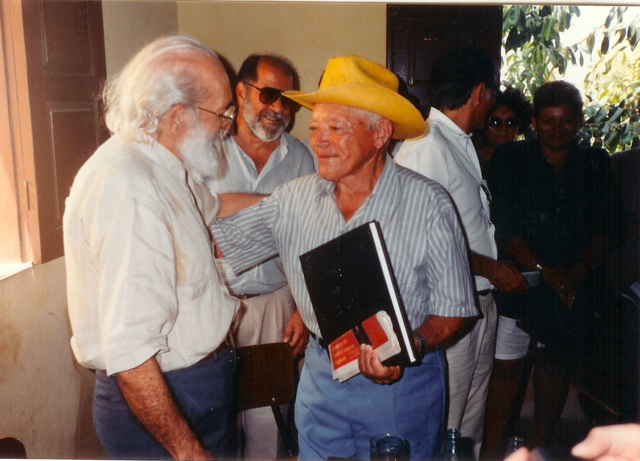
Paulo Freire 30 years later, in Angicos
Victims of Cold War?
The event in UFERSA continued with the proposition of “As 40 Horas de Angicos: vítimas da Guerra Fria?” (in English, 40 hours of Angicos: victims of Cold War?) mediated by ex-coordinator of the Culture Circle, Professor Marcos Guerra. In 1962, Marcos Guerra was a Law student and president of the State Union of Students and, at Paulo Freire’s request, formed the literacy team – monitors – of the Experiment. “We can say that Paulo Freire, in a simple way, discovered the ‘ovo de Colombo’” (in English, ‘Egg of Colombo’ an expression which refers to a brilliant idea or discovery that seems simple or easy after the fact), said professor while presenting the prints portraying the daily life of the rural workers that were used to literacy them, and justified this nominal expression with the sentence: “In two months, 300 “angicanos” (people from Angicos) were literate in a universe of 800 electors”.
Guerra also emphasized Angicos as an experience guided by many difficulties and resistances, even with the explicit support of the government of Aluízio Alves: besides the institutional cost per student of US$ 40, what happened in Angicos was only explicable by a bigger context, national and international: “In the national politic scenario we had Jânio, Jango and the parliamentarianism and, in the international, Guerra Fria, Cuba and Berlin Wall”. The newly literate Antonio, representing the class in the closing of the course, addressed himself to the president João Goulart and said: “In that earlier moment, came the president Getúlio Vargas, end the hunger of the people, the hunger for food, which is an easy hunger to sate. Now, in the current time, came our president João Goulart, to satisfy the need of the mind which all people have, the need of learning. We truly need things that we didn’t know, and now I am knowing. In other time, we were mass, today we are not mass, but people.” Angicos, therefore, was the deeper fermentation of a pedagogical change’s process, and also announced the possibility of political and social changes: in the social turbulence of the time, which the literacy of adults appeared as precondition to the social, political and economical development, Angicos was the voice of Northeast, calling for social justice, solidarity, and democracy.
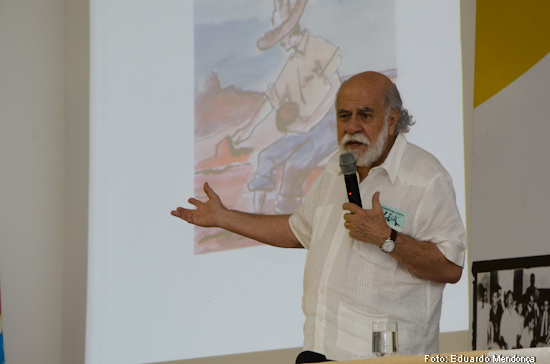
Marcos Guerra in the celebration
Paulo Freire Memorial
Another expressive moment of solemnity happened with the signature of service order by the rector of UFERSA Professor José de Arimatea de Matos, for the construction of Paulo Freire Memorial: Museum and Training Center. On the occasion, the rector announced the conclusion of the project for the construction of Paulo Freire Memorial which, in the first stage, will add an investment of R$ 1.2 million. The funds for the second stage are guaranteed by MEC in the University budget for 2014. The Commission proposes that the Memorial hosts a museum (physical and virtual); a Training Centre for Educators of Youth and Adult; and a Pedagogy Course – a proposal of the Rectory of UFERSA to creation of a course with emphasis on freirean vision of popular education. The Rector presented the proposal, which was forwarded to the Ministry of Education an Culture.
The bust of Paulo Freire, the “angicano” artist Marcos Silva’s work, becomes part of the Memorial, as its first-pie.
In the next day…
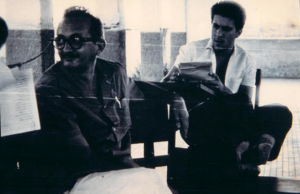
Marcos Guerra and Paulo Freire in Angicos, 1963
In the roundtable that followed Marcos Guerra, 40 Hours of Angicos – Paulo Freire and his influence on the practice of Adult Education in Brazil and Portugal, attended the president of honor of IPF Brazil, Prof. Moacir Gadotti, and the University of Coimbra (Portugal), Prof. Joaquim Alcoforado, with the mediation of Prof. Rita Diana Freitas Gurgel, of UFERSA.
On the same day 03, the UFERSA Angicos launched a publication. Entitled “Risa – Revista de Informação do Semiárido” (in English, Risa – Journal of Semiarid’s Information) – the UFERSA launched the first edition, which brings as theme “Paulo Freire – Cinquentenário das 40 Horas de Angicos” (in English, Paulo Freire – Fiftieth of 40 hours of Angicos). The publication has an interdisciplinary approach and is of an academic nature.
It was also in the end of the first day of event, that those literates in Angicos, who were located, received their certificates.
Thrilled, the son of educator, Lutgardes Freire, represented the family at the opening of celebrations of the Fiftieth of 40 hours. “Touches me remember the thought of my father who, as an educator, always remained coherent with what he did and lived,” he said while expressing his joy in participating in the celebrations of Angicos.
The rector of UFRN, Professor Angela Paiva, also expressed joy: “To deepen and practice the freirean methodology means to preserve and immortalize it. Congratulations to all teachers and researchers who maintains Paulo Freire alive. “
To the congresswoman, Fátima Bezerra, of the Education Committee in Congress, celebrate Paulo Freire has everything to do with the advances made in the last decade in the field of education. “There is still much to be done, like this University and the Pact signed today, we still have to advance in policies for the book and the reading”.
The date was remembered in Parliament by the congressman, Fernando Mineiro (PT). The parliamentarian took the opportunity to criticize the interruption of the project by the military. With the 1964 coup, Paulo Freire and other collaborators were arrested and exiled: “If this project had not been stopped, we would not have this situation today in Brazil, with a large number of illiterates”, he said.
The senator Eduardo Suplicy (PT/SP) spoke at the plenary session to remember the 50th anniversary of the first class of literate. Suplicy drew a social cultural profile of the learners, synthesized methodologically the experiment and described the event which, coincidentally, was occurring in Angicos at same time that he was pronouncing and finalized: “The best tribute we can pay to Paulo Freire will be to pursue this struggle multiplying efforts at all levels of government to eradicate Brazil’s illiteracy in the shortest possible time”. To listen to the tribute of senator in fully, please visit: http://www.youtube.com/watch?feature=player_embedded&v=7U_XuX61p4U#!
What comes next…
There are still many things to happen until 2014 due the celebrations of Angicos. In SÃO PAULO, the meeting “Paulo Freire e a Educação Superior” (in English, Paulo Freire and the Higher Education) will take place at the “Memorial da América Latina”, from 05 to 07 of November. There will count with the presence of many ministers of Education from countries that Paulo Freire had a significant presence or in those that his theory was public assumed as educational orientation. On the occasion, will be launched two books, “Paulo Freire e a Educação Superior” e “Manuscritos da Pedagogia do Oprimido” (both manuscript will be personally deliver by the former minister of the Agrarian Reform of Chile, Jacques Chonchol, to president Dilma). The event will be organized by UNINOVE (Universidade Nove de Julho), Instituto Paulo Freire Brazil and Paulo Freire Chair of PUC/SP (Pontifícia Universidade Católica de São Paulo).
In NATAL, capital of the Rio Grande do Norte State, the National Meeting of EJA’s Forums – ENEJA – will be from 11 to 14 September 2013. The Secretariat of Education of the state purposes, besides the constitution of the commission with the assigment of plan and collaborate to the realization of a local agenda of celebration of the 50 years, create, such as the Observatory of University Student’s Life of UFRN (www.oveu.ufrn.gov.br), the Observatories of EJA (ObEJA: RN, PB, PE); realize a schedule of training activities for teachers involved in programs, projects and activities of EJA; realize freirean studies, identify and systematize good practices of EJA; institute the “Prêmio Paulo Freire de Educação de Jovens e Adultos” (in English, Paulo Freire Prize of Youth and Adults Education), to be granted to the cities that achieve universal literacy rates, during the years of 2013 and 2014, performing, in the Vale of Açu region and Angicos, Festivals of learning, a methodology already adopted in several countries that provides space for biographical narratives of young individuals and adults about their learning in the workplace and other social practices.
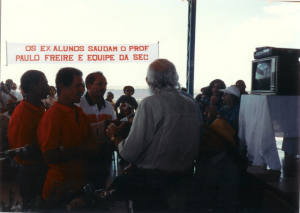
Paulo Freire 30 years later, in Angicos
In RECIFE, capital of state of Pernambuco/PE, the Chair of the Paulo Freire of UFPE and Paulo Freire Center – Studies and Research have a schedule of celebrations called PAULO FREIRE – 50 years of Angicos, in state and international level during 2013, which involves, on 02 and 03 May, the II Seminar EDUCATION AS PRACTICE OF FREEDOM: Paulo Freire in Recife, Angicos and in the world; and, from 19 to 21 September, the VIII International Colloquium Paulo Freire.
In JOÃO PESSOA, capital of the state of Paraiba/PB, the UNESCO Chair of EJA of UFPB intends to participate in the National Commission and Local Commission for celebration of 50 years of Angicos, coordinated by the Secretariat of Education of the State of RN; elaborate a diagnosis of EJA along with the Secretary of Education of the state, having as main instrument the construction of the Observatory of EJA; contribute to the realization of seminars with teachers of EJA in RN; develop and implement, along with the Secretary of Education of RN, the proposal of Learning’s Festivals (which would serve as a pilot for the realization of a National Learning Festival in 2014); hold a seminar, with date to be confirmed yet, on the freirean influence in the field of EJA in the Portuguese-speaking African countries, involving educators and managers of Cape Verde and Guinea-Bissau and, if possible, Mozambique, Angola and Sao Tome and Principe as well. During the seminar will be launched the documentary “Intelectuais da Vida” (in English, Intellectuals of Life) that articulates the thought of Paulo Freire with the proposal of South-South cooperation in the field of Education for Youth and Adults and report Bilingual IV Workshop of the Network of South-South Cooperation in the field EJA (held in Maputo in 2010) that counts with the support of the UNESCO Office in Brazil.
Medals and stamps
Paulo Freire Medal, by decree, was created with the goal of identify, recognize and stimulate educational experiences that promote policies, programs, projects whose contributions are relevant to EJA in Brazil. The grant of the Paulo Freire Medal is nationwide. For the year of 2013, the National Commission of Literacy and Education of Youth and Adults (CNAEJA) recommends that be included the grant of Medal in the context of celebrations of Paulo Freire Program – 50 years of Angicos/RN to personalities and institutions that provided relevant contributions for Literacy and Education of Youth and Adults.
There will be also the delivery of Paulo Freire 50 years in Angicos Medals in the meeting of the National Forum of EJA, in the second half of 2013, in Natal. And the International Medal of Education as Practice of Freedom, of the University of California – UCLA/Los Angeles, will be delivered to the President Dilma. The president will be the first laureate in a demonstration of appreciation for the work of Brazil, especially for its inspiration in the legacy of Paulo Freire, in the inclusive education, raising awareness and liberating.
And, to end the list of honors, two stamps were created: a seal of the Brazilian government, of identification in the disclosure of events included in the program of celebrations, and a stamp of the Post Office, commemorative of Paulo Freire Program – 50 years of Angicos.
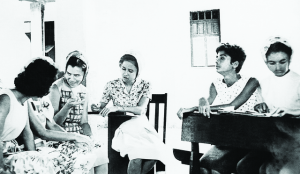
Madalena Freire participating in the literacy in Angico
One of the first institutions to use a commemorative stamp of Angicos 50 years were the Argentine FLATEC (Federación Latinoamericana de Trabajadores de la Educación y la Cultura – in English: Latin American Federation of Workers of Education and Culture) and SADOP (Argentine Union of Private Teachers). They promoted the Latin American Seminar FLATEC-SADOP: “Popular Education and Regional Integration, Effectiveness and Prospects of Paulo Freire’s Thought”, held at the SADOP’s headquarter, in Buenos Aires, on 24 and 25 April. The event was supported by Instituto Paulo Freire Brazil, OEI (Organización de Estados Iberoamericanos para la Educación, la Ciencia y la Cultura – in English: Organization of Iberoamerican States for the Education, Science and Culture) and “Centro Nueva Tierra” (an organization working for the poor and for social transfromação in Argentina).
Angicos, as we have seen, can not only serves as a symbol of struggle against illiteracy in Brazil. Angicos is also a metaphor of a radical discourse for public school becomes popular, a speech that invites to action, transiting from theory to practice, a discourse that rebuilds the foundations of educational administration in Brazil and around the world on the ruins of neoliberal storm. Only then, Angicos, as metaphor, will be able to turn itself into reality.
For further information on the celebrations’ agenda, visit: http://angicos50anos.paulofreire.org/