 Portuguese
Californian Association of Freirean Educators (CAFE) is a group of students, of graduation and post-graduation, belonging to UCLA (University of California, Los Angeles) and which works in partnership with Paulo Freire Institute (PFI). CAFE searches to gather students, academics, activists and professors inspired by Paulo Freire’s pedagogy to promote advance and reinvention of freireans educational theories.
 Since 2006, the annual Conference of CAFE is an initiative of students and for students of Department of Education. It wasn’t possible to realize the event only last year due the International Meeting of the Paulo Freire Forum that, in this newly edition, was under responsibility of UCLA/PFI, in partnership with Paulo Freire Instiute of United Kingdom. During last years, besides cultural circles and lectures, the event also counted with theater, music and other forms of expression. In 2013 the annual Conference returned to CAFE and PFI schedule, this time reflecting on the Education as Critical Consciousness, on 12 and 13 April, 2013.
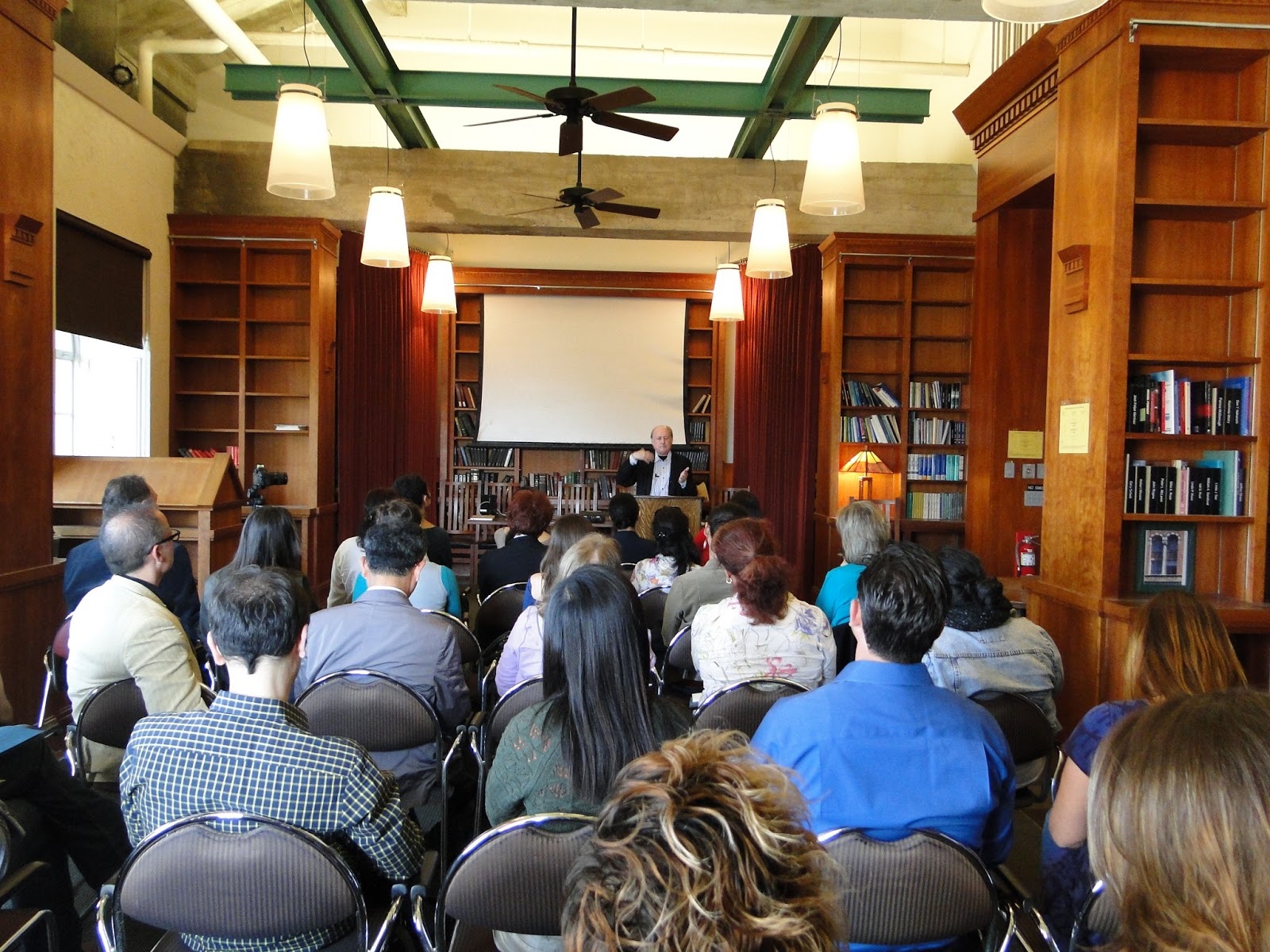
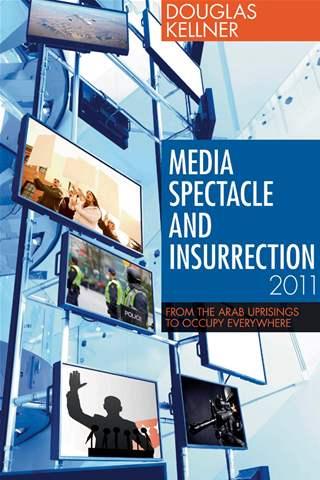
On 12th, a Friday, the first speech of the Conference was entitled Media Spectacle and Insurrection, 2011: from the Arab uprisings to occupy everywhere. “Media Spectacle” it is a key to interpret contemporary culture and politic. Many events of war, terrorism and media are constructed and presented as spectacles of the media, such as in 2011, the democratic insurgences. Douglas Kellner discussed how the democratic insurgence in Tunisia, Egypt and Libya produced new models of political transformations diffused to all the surrounding as a spectacle of media and generating new intensive conflicts, as well as he discussed the sense of the Arab insurrections are or are not revolution and how these insurgences impacted political movements in Spain and Greece. He also caught attention to the role of Al-Jazeera as the voice of democratic revolution in these insurgences and closing his speech reflecting on how, in which manner, the year of 2011 is understood by him as a historical mark of political insurrection.

Douglas Kellner
Douglas Kellner is from the Philosophy of Education, emeritus teacher at UCLA and author of many books about Social Theory, Politic, History and Culture, including Political Chamber: the politic and ideology of the contemporary cinema of Hollywood; Critical Theory, Marxism and Modernity; and Jean Baudrillard: from Marxism to post-modernity and beyond. In 2012, he published “Media Spectacle and Insurrection, 2011: from the Arab uprising to occupy everywhere”.
Teresa McCarty
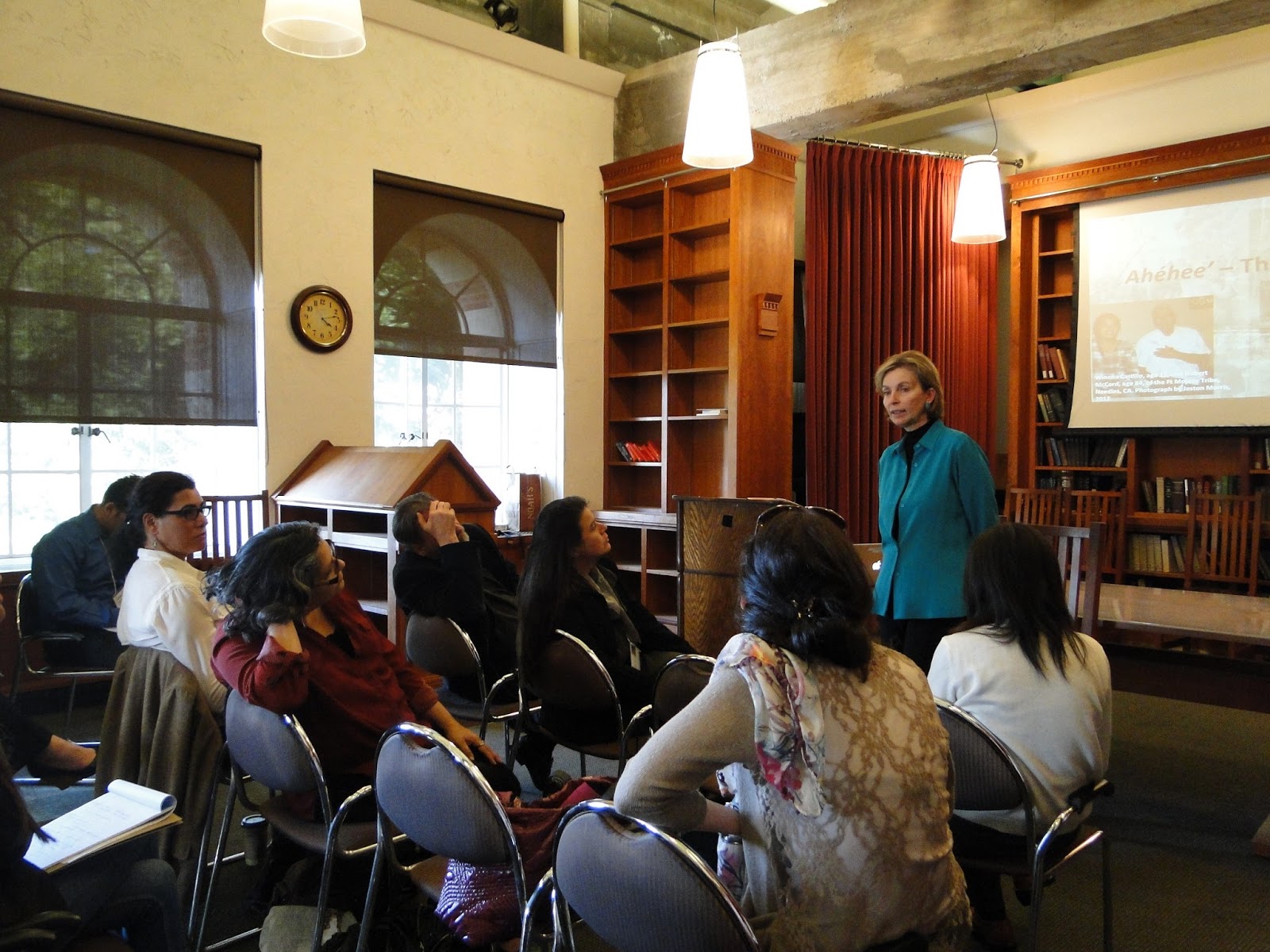
The second speech was of Teresa L. McCarty and was called “A place of right”: contesting speeches of deficiency in the teach of indigenous language and appreciation/ recovering. For Paulo Freire, the main leveraged for self strengthening of community is the language. In the whole world, indigenous and other minorities people are fighting for the rights of their languages of origin against a historical background of linguistic and cultural oppression and a contemporary context of globalization, standardization and socioeconomic stratification. The focus of Tereza McCarthy is in the teaching of languages and its recovering between American indigenous, under the premise of empowerment of its speakers. Expanding the notion of Ramathan (2010) of “un-citizenship”, for her these practices of labeling may create a logic that makes “small” languages, not dominant and endangered produce “un-citizens”. Through comparative ethnographic research, she explored the manners which indigenous communities are interrupting these practices of labeling through bold efforts for a new language teaching inside and outside the school.
Teresa L. McCarty is from the field of Education and Anthropology of UCLA. Anthropologist and Education Linguist, she has been teacher and coordinator of programs in education for American indigenous (in local, state and national levels). Her research and teaching is focused on political language, education for indigenous minorities, language/ideologies and practices of language of youth, studies of literary critics and ethnographic Education studies. In 2010, she received the Award George and Loiuse Spindler from the Anthropology and Education Council.
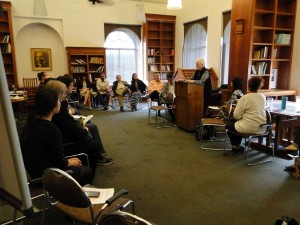
Dr. Hardings
On Saturday there was one more speech, from researcher Sandra Harding, called Point of View as Critical and Pedagogical Methodology, and during the two days many presentations of researchers interceded the speeches. For further information, PFI has a blog with some historical registers from others editions of the Conference (http://pfiucla.blogspot.com.br).
But What Would Paulo Freire do?
California is one more of the members of freirean community that has intensive activities at the moment, also accumulating projects during all the beginning of 2013. Besides the Annual Conference of CAFE, one more formative event happened in Los Angeles. Promoted by CAFE and by PFI, the Workshop CAFE for Educators will have as central theme the reflection What would Paulo Freire do? Narrative/Storytelling/Telling Intercultural stories, Democracy and Social Change.
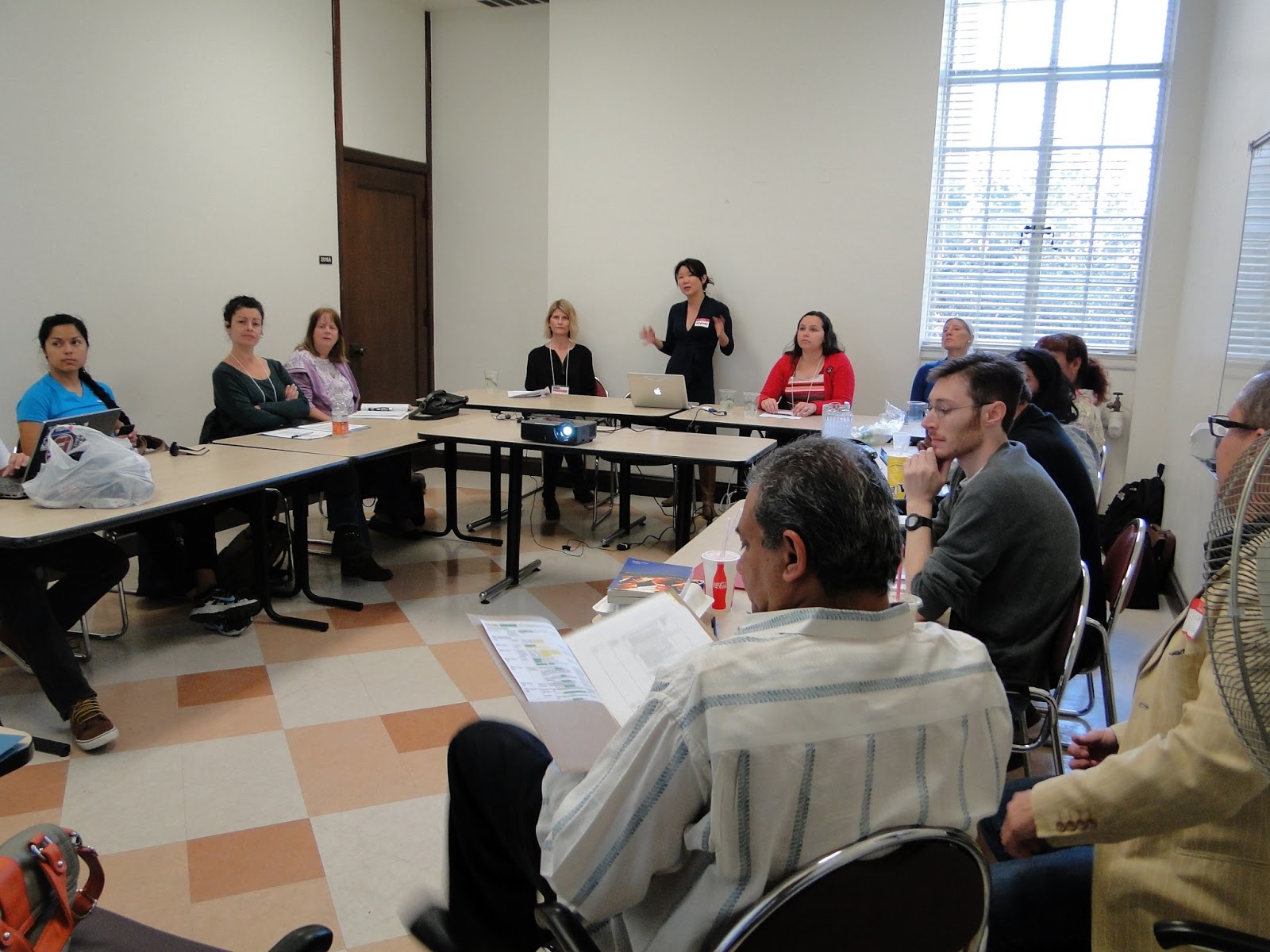
The formative meeting happened on 13 April, 2013, at UCLA, having as facilitator Dr. George Tanaka. The workshop was free and open to public and to all students of UCLA, despite being a space available for a maximum of 35 people.
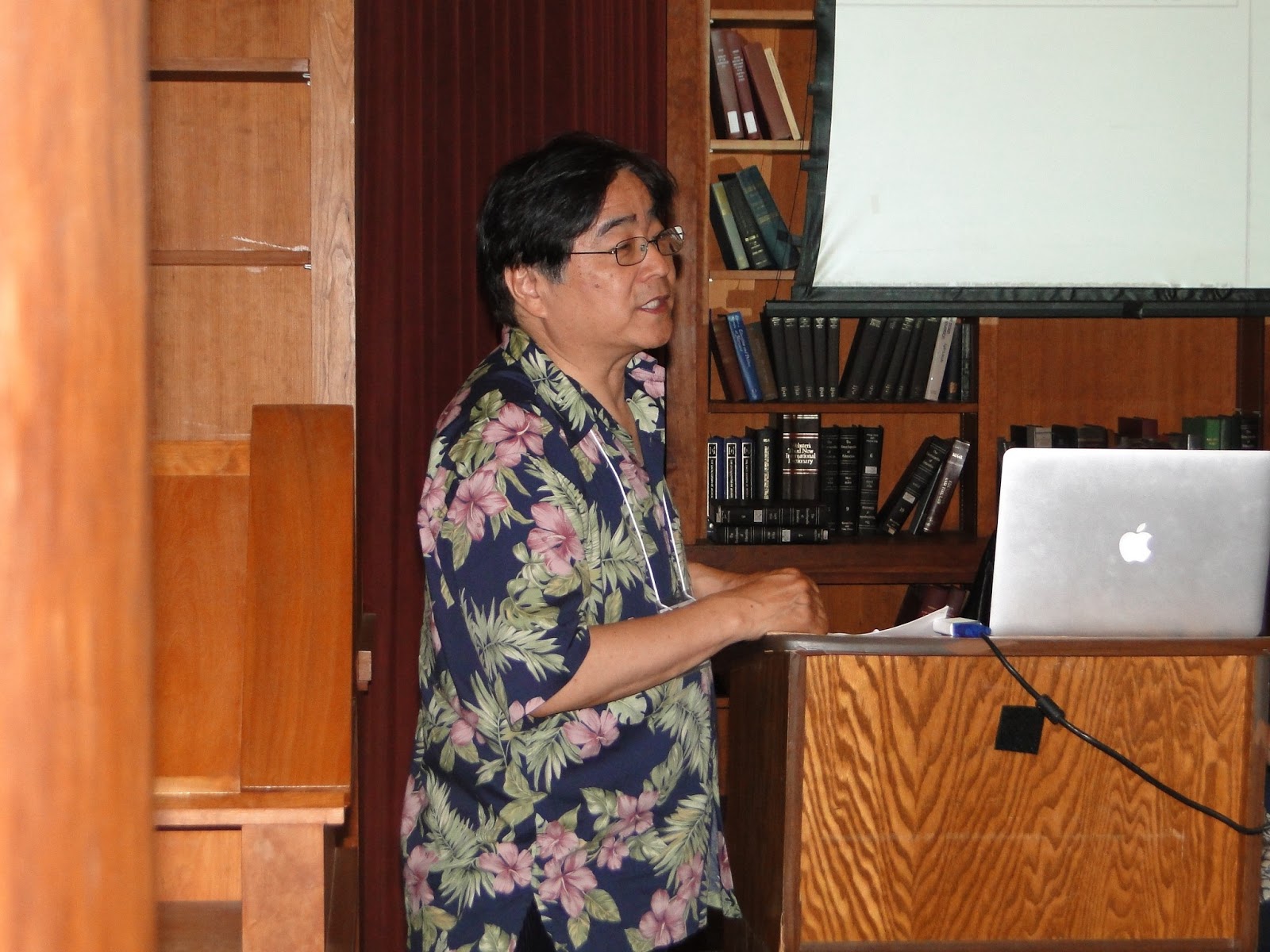
The event started with a short lecture, “Are USA in an economical depression already? So what would be to do Freire today?”. The first workshop, which happened right after this lecture, had as content Intercultural Storytelling as a Foundation for Social Change (Narrative/storytelling/Telling Intercultural stories as a Base for Social Change). Even during lunch there was an activity: Towards a Freirean Democracy. In small groups, participants established a dialogue, and after that, described elements for construction of a Democracy more freirean in USA, modeled after the Forum of Porto Alegre, in Brazil. The second workshop was called Re-context of the freireans ideas and the Praxis and small groups presented their perspectives and the entire workshop was around the dialogue on the ideas that have been brought.
Dr. Greg Tanaka participated of creation of the first intercultural university in USA and teaches investigation on Leadership, Methods of Qualitative Research, Race and Education at Mills College. He has a bachelor by Williams College, MBA by Harvard, studied Law in Georgetown and he has a Ph.D in Education (1996) and Anthropology (2002) by UCLA. The interventions complemented by him in the creation of the first intercultural University are described in his book, “The Intercultural Campus: Transposing Culture and Power in the American Higher Education”.
He has already crossed the country helping 20 faculties and universities to create more intercultural campuses, in which participants can learn with and share differences, where there isn’t domination of any culture. He has already taught in USC, Loyola Marymount University, Pacific Oaks College and in Post-degree of UCLA. He likes to inform that he likes fishing salmon, that exercise of interaction that is called “creative writing” and to play with ukulele (ukulele is a musical instrument, with strings, that has a doubtful origin, between Portuguese and Haywain). At the moment, he is involved in a study on how to construct a “participative” democraticy in USA.
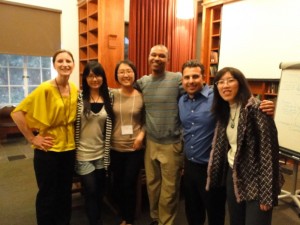
CAFE Staff – UCLA