 Portuguese
Not only in Europe, but throughout the world, the social and political realities in the last decade have dramatically changed. There were many unresolved environmental issues and, in this same scope, the energy situation of the world. Mass unemployment among young people in Southern Europe. The imminent collapse of the banking system and entire economies, associated with a significant loss of confidence in the state and its institutions. New social movements experience initiatives at their own and risk and the social media and the Internet are playing an increasingly significant role for the frame of these processes of social change.
How these global challenges interfere with learning conditions, in the institutions of formal and informal education, in the frame of science, in the development of initiatives to answer these challenges? There are projects able of build a committed community to its self-organization, without finishing individualistically? These questions can be answered by a concept that was born 4 decades ago: a situational approach.
Originated in educational reform in the 1970s in West Germany and based on a review of the project to the curriculum of formal education, it was initially designed for what we call “kindergarten”, and now the debate is being stimulated for teens and adults. At the origins of this thought are Shaul B. Robinsohn, Paulo Freire, Siegfried Bernfeld and Ivan Illich.
Increasingly, the situational approach is recognized as a universal principle of development: learning in life, learning as a challenging adventure. Networked or interconnected to other trends, have set new spaces, new areas of expertise: the intercultural education, integration of people with disabilities, poverty reduction through entrepreneurship education, psychosocial work in conflict areas, education of youth and adults. The situational approach has a successful work history with the triggered learning, the problems solving in real situations, instead of resolution of false problems in the classroom. And an emphasis has been given in recent times to open communities of learning.
The Intercultural Thought and Act – research and development across borders
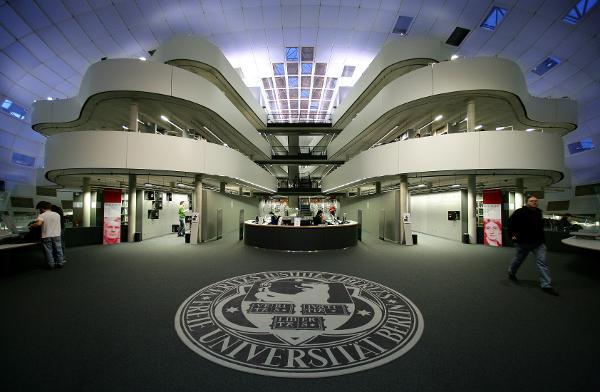
On days 03 and 04 October 2013, at the Henry Ford Building, the University of Berlin will host an event in celebration and to new dialogues about these 40 years of situational approach. More specifically will be the “International Academy for Innovative Pedagogy, Psychology and Economics (INA)”, a nonprofit organization connected to the University, which will be leading the initiative. INA implements and develops research projects and professional improvement programs and educational training, not only nationally but internationally, with emphasis on the establishment of an interdisciplinary discourse between Psychology, Pedagogy and Economy. It was created in 1996 by Professor Emeritus Dr. Jürgen Zimmer and other associated.
Many organizations, groups and individuals have come together to the launch of INA corroborating the awareness of the need to cross and go beyond the boundaries of their respective “subjects” of origin, as well as in their teaching activities. In all projects and institutions linked to INA, the interdisciplinary questions and about cooperation are the major concern for the research, theory building, of practice implementation and to think Education, in a general way.
The event’s title will be Shaping the Future - between individual initiative, social change and public responsibility – 40 Years of the Contextual Approach.
On Thursday, 03 October 2013, the first day of the event, the reception will be held by Prof. Dr. Peter Andre, president of the “Free University of Berlin”. After him will follow Dr. Peter Moss, from University of London, with the work Re-conceptualizing Childhood Education and Care – Learning during the life – formal and informal education; Prof Dr. Jürgen Zimmer (INA) and Prof. Christian Schröter (CBA, China) – will bring reflections in a forum about the 40 Years of Contextual Approach: history and current developments. More to the end of the day, there will be new dialogue, this time between Dr. Lothar Krappmann and Dr Christa Preissing (member of INA and of the Berliner Kita-Institut für Qualitätsentwicklung) on Human Rights and Children’s Rights as Ethics Basis for Research and Practice Development.
In English, Professor Ada Pellert (founding president of Carl Benz Academy Beijing and chairman of Deutsche Universität für Weiterbildung), Klaus Maier (director of sales for Mercedes-Benz) and Prof. Qiao Liu (deputy director of the Guanghua School of Management – Peking University) will talk about the Situational Approach for Economy – the inner child as an innovator.
On Friday other forums will be held, with topics such as Contextual Approach to political conflicts, Research and Quality Assurance as a process of learning and responsibility, Diversity and inclusion, Learning in real situations – the art of innovative entrepreneurship and will be discussed and mediated by other members of INA, by representatives of several German institutions, among them many higher education institutions, as well as invited representatives of Austria and UNESCO.
Parallel to the conference venue, there will be an exhibition on the situational approach (a work of the INA itself), a programming only of movie and the Klingendes Museum. The contacts regarding questions and registration for the event must be conducted with Sylvia Richel. The available phone is +49 (0) 30 838 5203 1 and the email is konferenz@ina-fu.org
For further information, visit: http://www.ewi-psy.fu-berlin.de/v/ina/termine/konferenz_situationsansatz.html