 Portuguese
 E haverá importância maior que conviver
com os oprimidos,
com os esfarrapados do mundo,
com os “condenados da terra”?
Paulo Freire
In Mexico, 15 years ago, the Autonomous University of Chapingo has been developing a participative educational project and peasant participation, assuming the educational participative methodology and libertarian of Paulo Freire.
The project is called Peasant Schools, is based in a Decalogue of principles such as: 1. shared knowledge 2. dialogue of knowledge 3. development of the critical thought 4. sustainability defense 5. integration between practice with theory 6. social participation 7. solidarity 8. cooperation 9. self-administrated organization 10. democratic citizen formation
This project, three years ago transformed itself in a School Peasant Movement, at national level.
Until now, inside the Movement, 12 national meetings have been held about the agroecological and socio-cultural ones of the Peasants Schools.
From august 27th to 29th, a third Meeting has been held in the Totonapacan-Husteca region, in the Veracruz State. This event is transcendent because in the region, at this time, the communities of peasants and the regional people have been cornered and unstructured in their territories and in their cultures, by the impact of the great extractive projects and energetic ones of capitalist companies, as much as national as multinational, whether Americans, Europeans or Asiatic ones, that are taking place in this region of Mexico and contaminate the water, the ground and biodiversity, impacting negatively the regional agriculture and public health.
Publications about Peasant Schools of Mexico
The experience developed by the Peasant Schools in Mexico, inspired in the freirean pedagogy, has been systematized and analyzed in many publications done by the Chapingo Autonomous University. The group of teachers of the University that participate of this experience created an Institutional Strategical Project, called: “Peasants Schools: an alternative way of Education and Communitarian Capacity”. Among the results there is the publication of the following books:
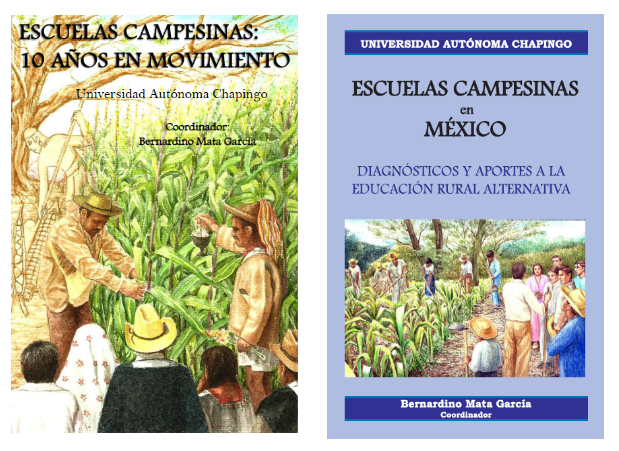
Text written by Bernadino Mata García from Catedra Libre Paulo Freire. Rural Sociology Department of Universidad Autónoma Chapingo.
Contacts: bmatag@hotmail.com
https://bernardinomatag.wordpress.com/