 Portuguese
The 8th edition of the International Meeting of Paulo Freire Forum was held in Los Angeles, from 19 to 22 September 2012, and hosted and organized by Paulo Freire Institute (PFI) – UCLA (University of California), along with Paulo Freire Institute of United Kingdom. This Forum is organized every two years and Paulo Freire Institute of different continents attend to discuss the possibilities for a transforming education and guided to a social justice. Looking into this way that were conduced the proposal of the theme for the Forum 2012 – “Think a World where is easier to Love: The Education and the Social Justice of Paulo Freire”. The Forum developed itself on three main sub-themes: Gender and Education, the Role of Intellectuals in the Education and Eco-pedagogy.
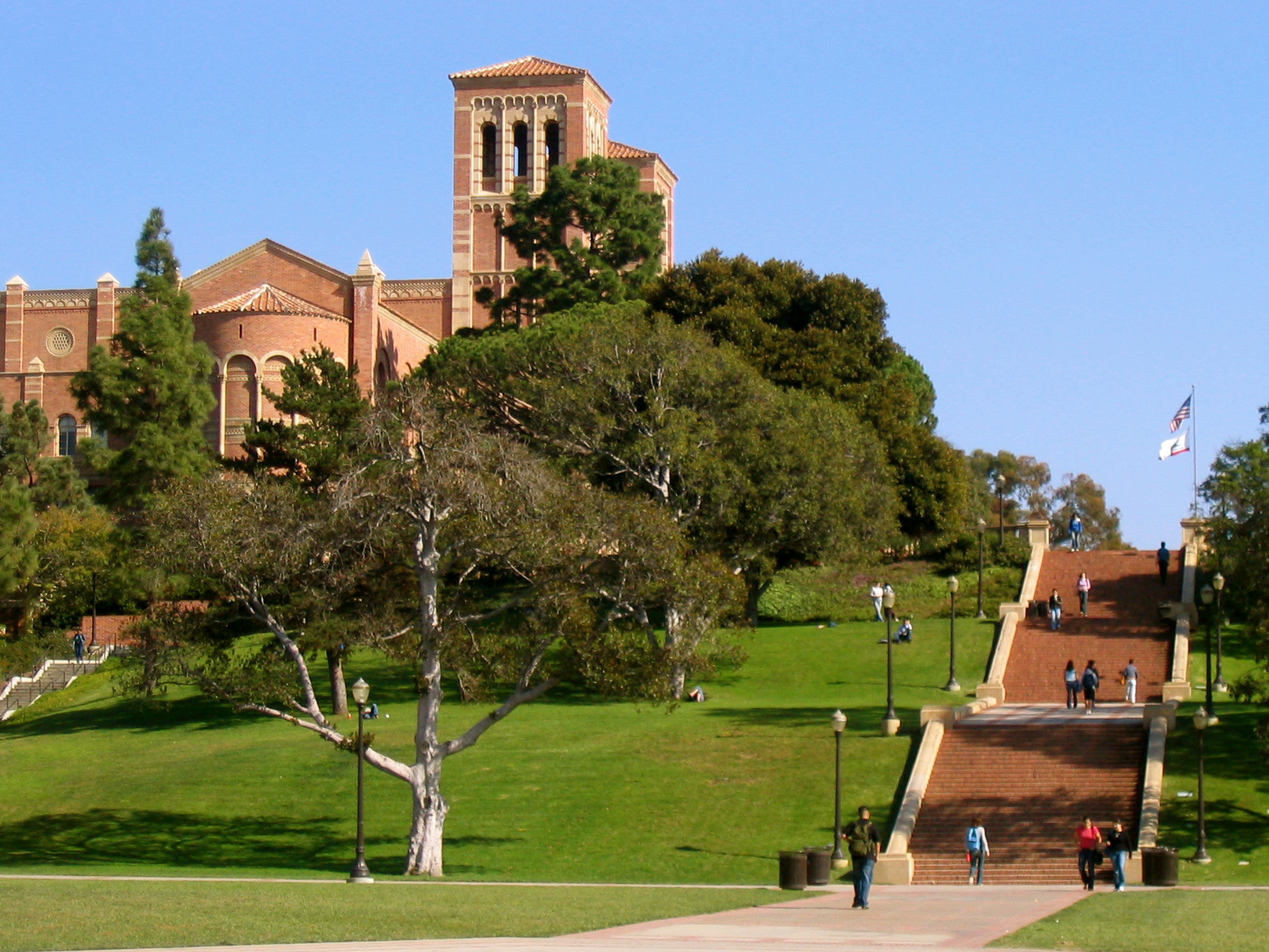
According to Jason Dorio, member for PFI and PhD student of Social Science and Comparative Education Division, at UCLA Graduate School of Education and Information Studies, who we appeal to discovery a few data of this latest edition of the Forum, the VIII Forum built a critical space to the dialogue between 125 exhibitors and 200 participants from over 15 countries.
The four days of event gathered representatives of eight Paulo Freire Institutes, student members of community, professors, activists and scholars. Some of the highlights pointed by Jason are: Dean Marcelo Suarez-Orozco, Carlos Torres (Director of PFI – UCLA) and Penny Jane Burke (Director of PFI – UK), as well as the performance of students of the Social Awareness Network for Activism through Art group, and of cultural visits for the UCLA Lab School and Critical Visual Literacy: an experience at the Getty Museum.
On 21 September 2013 happened the traditional meeting of World Council of the Paulo Freire Institutes. The institutes of Portugal, Italy, USA, Brazil, Argentina and England were present. The group dialogued and contributed a lot to the Letter from California, key document and synthesis of this edition of the Forum (to get to know the previous letters, as well as to have access to the graphic materials, videos, photos and others documents from others forums, since 1998, visit: http://forum.unifreire.org/), after achieved consensus on the birth of a Chair in Brazil (that is a matter of another article of this same Bulletin edition).
PFI – UCLA also informed us, by email, that they would like to thank all the participants, especially the volunteers.
An Italian perspective…
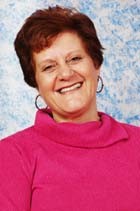
Silvia Manfredi
Silvia Maria Manfredi and Piergiorgio Reggio, respectively the president and the vice president of Paulo Freire Instittute of Italy, attended the International Forum of Los Angeles and PFI of Italy not only provided some documents official related to the Forum in its website (http://www.paulofreire.it/index.php?option=com_content&view=category&layout=blog&id=49&Itemid=99&lang=pt), as you can also read a journal from a Italian participant. We now offer, here in the UniFreire Bulletin, an adaptation of this journal.
Pieces of Piergiorgio Reggio’s reports (PFI Italy)
19 September
Today, initiated the 8th Forum of thr Paulo Freire Institutes. There are around 100 people, from different continents. They represent Paulo Freire Institutes in the world, but also associations, movements, groups and academic institutions that confer a freirean approach to Education.
We are guests of UCLA, Social Science and Comparative Education Division, where teaches Prof. Carlos Alberto Torres, founder and director of PFI USA, who in different moments was already our guest in Italy. The Forum was opened with a session entitled “(Re) Imagining Immigration and Education in the Era of Global Vertigo”. In this session, Prof. Marcelo Suarez-Orozco, director of the Division, proposed some reflections on the current processes of migration and its implications for the pedagogical dimension. Follows below some elements – in a synthetic way – of what seemed significant to me in his speech.
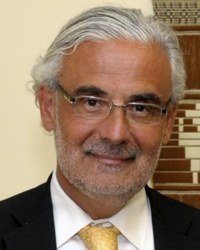
We are seen an exponential increase of global migration in the world during 1990 to 2010: 155-210 million of people (source: UN). In Europe, from 50 million in 1990 to 70 in 2012, in Asia from 50 to 60 million and in North America from 28 to 50. Only in USA were from 23 to 43 million, in Africa from 17 to 20 million. The migration is, at the same time, history and destiny.
Homo sapiens mobilis (characteristics):
- The immigration is “by and for” the family
- The immigrants are economic, social and politic actors through the borders
Following migration:
-
16 millions of youth with migrants parents
-
The fastest increase of child’s population
-
Increase of Hispanic and Asiatic population and decrease of white and Afro-American population
There are significant lacks to accomplish success with an educative plan:
-
The boredom, the routine became the “elephant in the classroom”
-
There are urgent issues for the equal education. Increase difficulties for the integration of an increase number of black youth in France, Netherlands, German, USA and all models seem deficit.
In this same session we received a greeting from Penny Jane Burke, from University of Sussex, United Kingdom, co-founder and director of Paulo Freire Institute of Great Britain, newly created.
Suarez-Orozco highlighted the effects that the changes brought by globalization demand: the primacy of individualist and competitive paradigm, a scenery dictated by the primacy of individual competences, all in detriment of social dimension of knowledge. There were also identified some big educational challenges of nowadays: the gender, political and international issues.
In the afternoon there was a session dedicated to the theme “The Role of Public Intellectual”, which Tarozzi (Massiniliano Tarozzi – Università di Trento, friend of PFI Italy) participated, including with his own speech, approaching the theme “Training of Professors as Public Intellectuals”.
Were initiated, then, several panels. In the one that Prof. Piergiorgio Reggio coordinated, “Developing critical consciousness in adult education: strategies, methodologies and political effects”, we had 04 speeches, including from Silvia Maria Manfredi, president of Paulo Freire Institute of Italy which text may be found in the website of PFI of Italy. The speeches have been very interesting, you can also read the abstract on the website. The debate was rich and the panel continues tomorrow with others speeches.
20 September 2012
The first day of the Forum, 19 September, ended in a reception with wine, a relaxing moment to meet others participants. The wines are from California and the Cherries, Mexico . The second day was followed of deployment of the panels and thematic sessions.
Panel “Developing critical consciousness in adult education: strategies, methodologies and political effects”, coordinated by Piergiorgio Reggio
Initially we discussed the experiences presented yesterday by Liliane Windsor and Alexis Jamal from Rutgers – The State University of New Jersey, entitled “Opening windows of Critical Consciousness: a process Evaluation of Community Wise”.
There are presented and discussed the methodological aspects of its initiative in a specific work of development of critical awareness with prisoners, mainly, Afro-American. The intervention used – as part of a freirean diaologic approach – techniques such as discussion groups, photos, histories, use of community mentors.
Following, the panel builds a discussion on the speeches made yesterday by Silvia Maria Manfredi and José Ramos Barbosa da Silva. Silvia Maria Manfredi deepens some aspects of her speech mainly in what refers to modality of collective production of knowledge that occurs in the educative process of freirean tendency. The discussion also involves Prof. José Ramos Barbosa da Silva, from Universidade Federal da Paraíba – Brazil, who yesterday presented a speech on “Learning with the work and the daily experiences”.
The experiences presented by Manfredi and Barbosa have several aspects in common, not only by the reference in common, the freirean pedagogical principles, but also in the execution ambit: adults education with farmers and union workers. During a pause in the work, I was interviewed by Alexis Jamal, a young researcher of Rutgers, who is conducting a research on the strategies for development and evaluation of critical awareness.
One of the panels that would occur at the same time to this one, that I watched, was dedicated to the theme of Eco-pedagogy, in which there is a long time that Moacir Gadotti works. Greg Mislaszek, from PFI and UCLA, Los Angeles, opened the session and theme, presenting results of a research realized in Appalachians in USA, Argentina and Brazil.
Eco-pedagogy is an educational propose formulated by Francisco Gutierrez and Cruz Prado, with a freirean perspective, a perspective that considers a relation between environmental phenomena and educative processes. The Mislaszek’s research also considers aspects of the construction of a global citizenship, through different inclusion spheres, from local community to global and planetary dimension, considering the relevance of relations between North and South of the world. Moacir Gadotti from PFI Brazil, for his part, defines the planetary citizenship, different of the traditional conception of citizenship, as “a set of attitudes, principles, values and behaviors that show a new perception of Earth as a unique community”.
Daniel Dominguez Valles, Mexican PhD student at the University of California, approached issues of environmental education related to his country’s situation. In the morning, there were a meeting of directors from several Paulo Freire Institutes with Prof. Marcelo Suarez-Orozco. He is from Argentina and professor for years in USA. In this same occasion Prof. Suarez also would be invited to participate in an event next year, a meeting that PFI will celebrate in Angicos, Brazil’s Northeast, where 50 years ago started the first freirean literacy campaign.
In the afternoon we continued with panels and thematic sessions. In the panel “The Role of the Public Intellectual”, coordinated by Rich van Heertum from UCLA and PFI Los Angeles, Maria Paola Rottino, from San Remo, with the work “People in Arts”, presented a speech comparing her experience in Italy – from school as a real teacher, political participation and freirean motivation – and the experience that she is taking to Haiti, where develops a work of pedagogical support with a freirean configuration to school’s teachers and operators involved in project of community development.
21 September
The organization of the Forum has developed, in the last days, several interviews in video with foreign participants and representatives of several PFI. The interview topics were the ones approached by the Forum in a general way: the role of educators / professor as public intellectual, its relation with oppressed groups, its relations with groups of ideological orientation and different value. For each one of us was also requested to answer specific questions about the situation of educative-social work in the country of origin.
Today I saw the conclusion of several panels and thematic sessions and was made a meeting with directors of several Paulo Freire Institutes. On behalf of Italy was Silvia Manfredi.
The discussed topics were:
-
The event that will happen in Angicos on September 2013 to celebrate the first experience of literacy performed by Paulo Freire, at the same place that was made back then
-
The organization of the next International Forum, that should occur in September 2014. Progress was made in the movement of Great Britain and Italy’s application. Our president manifested availability and interest of PFI – Italy to organize an international forum. It is an important sign, but also a challenge. To receive and accommodate in our country educators, researchers, social assistants related to freirean pedagogy in different continents would be a rich opportunity, that certainly should be evaluated along with all members and friends interested in PFI – Italy about the sustainability of the initiative. In a first hypothesis, obviously it needs to be verify, Torino could be the candidate host, considering the relation that has with a significant reality in the educational-social context, the social and private institutions. Essential regarding the investigation of feasibility will be the availability of sponsors to give financial support to the initiative
-
Compose and approve of the Letter of California. As usual, the Forum, actually, is only concluded with a joint declaration (the Letter) of the present institutes. The Letter is available today only in English and Portuguese. It is been translated to Spanish and we invite members of PFI Italy to become volunteers to translate it to Italian.
The works of Forum were closed with a plenary, a final speech of Penny Jane Burke, director of IPF – Great Britain e co-organizer of the Forum in Los Angeles. When the speech was done, there was an elegant dinner at UCLA. In the morning of Saturday, on 22, was proposed an interesting activity of experimental character in Getty Museum: “Critical Visual Literacy: an experience at the Getty Museum”, led by Simon Kenrick, British scholar of History of Art, professor at Antioch University, Los Angeles. The experience allowed us to treat issues as the dialogue between cultures and the intercultural view, the development of critical awareness.
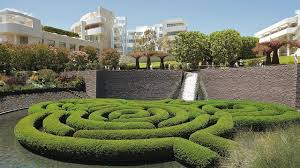
Getty Museum
On Saturday’s night there was a big dancing party at the house of Carlos Torres and Ana Elvira Steinbach, in Topanga. Sausages and Chorizo, tons of Mexican beer and California wine, professional DJ, with Latin-American dances. Our president, Silvia Manfredi, gave classes of salsa, merengue music, samba… Massimiliano Tarozzi and I, having no swing, jumped how we could. As courtesy to those who invited us, we performed, overcoming the imaginable embarrassment, the reading of Dante’s Inferno Canto 26: Ulysses and Diomede.. in short, the theme of the Forum.
Private journal, but I offer it voluntarily to all. The curtain fell, out of the stage, since that Carlos and I have, finally, years latter, performed a common dream of a soccer match. I could play with Bravo, the team composed almost entirely by Argentines (official shirt of Argentine nation), in a game of the championship against over 48 Titans, mix formation of several countries of Oriental Europe, South America and North-Americans. Gloriously we won of 5 to 3! Carlos also scored big goal. There are photos that documented the extraordinary event.
A very sad event: in the fish tank with a cascade that has in Carlos’ house, a black fish was capture, killed and half eaten. The investigations are in progress. Among the suspects: a coyote, an egret, a lynx. In Carlos’ property we planted today three Italian Olive Tree. Three as my children. Carlos promised that in any time in the future we can come to take its olives or oil. Hacia el porvenir! The journal finishes, I will fly to Europe. I am coming back!
About 2014…
A very significant moment in the meeting of the World Council of Paulo Freire Institutes in edition of Los Angeles was the discussion on next Forum’s edition. Professor Penny Burke (England) and Professor Silvia Manfredi (Italy) presented their applications to the organization. Both, however, reported difficulties regarding financing to the realization of the event. Professor Carlos Alberto Torres presented cost estimates, from his experience on International Meetings of Paulo Freire Forum in 2002 and 2012. He also problematized that, because of these high costs, the Meeting may could happen every triennium and not every biennium. The group reflected on the proposal, but understood that exists few moments of personal contacts between the Institutes, Chairs and others and, therefore, decided that maintain this periodicity would be fundamental.
Returning to the discussion on the local to be held the Forum, professors Burke and Manfredi requested a term that they could confirm with their institutions the financial feasibility of the organization. Shortly after, the freirean community received the confirmation of Italy as the next host.
Still in this same meeting, Professor José Eustáquio Romão and Moacir Gadotti considered that the permanent secretariat of International Meetings of Paulo Freire Forum and World Council of Paulo Freire Institutes should be UniFreire. Therefore, the decision of participants was that, from that data, would only have one Secretariat, UniFreire, that should be in permanent contact with the director of PFI which will held the International Meeting, as well as is its responsibility to publish semiannually our UniFreire Bulletin.